
Volume Builder vs Custom Builder + Interior Designer: What You’re Really Choosing
If you’re building or renovating, you’ll likely find yourself at a crossroads:
Option 1: A volume builder - quick, streamlined, “all-in-one.”
Option 2: A custom builder paired with an interior designer - more tailored, more considered.
On the surface, one feels easier. The other can feel… a bit unknown.
But they are very different experiences and the outcome reflects that.
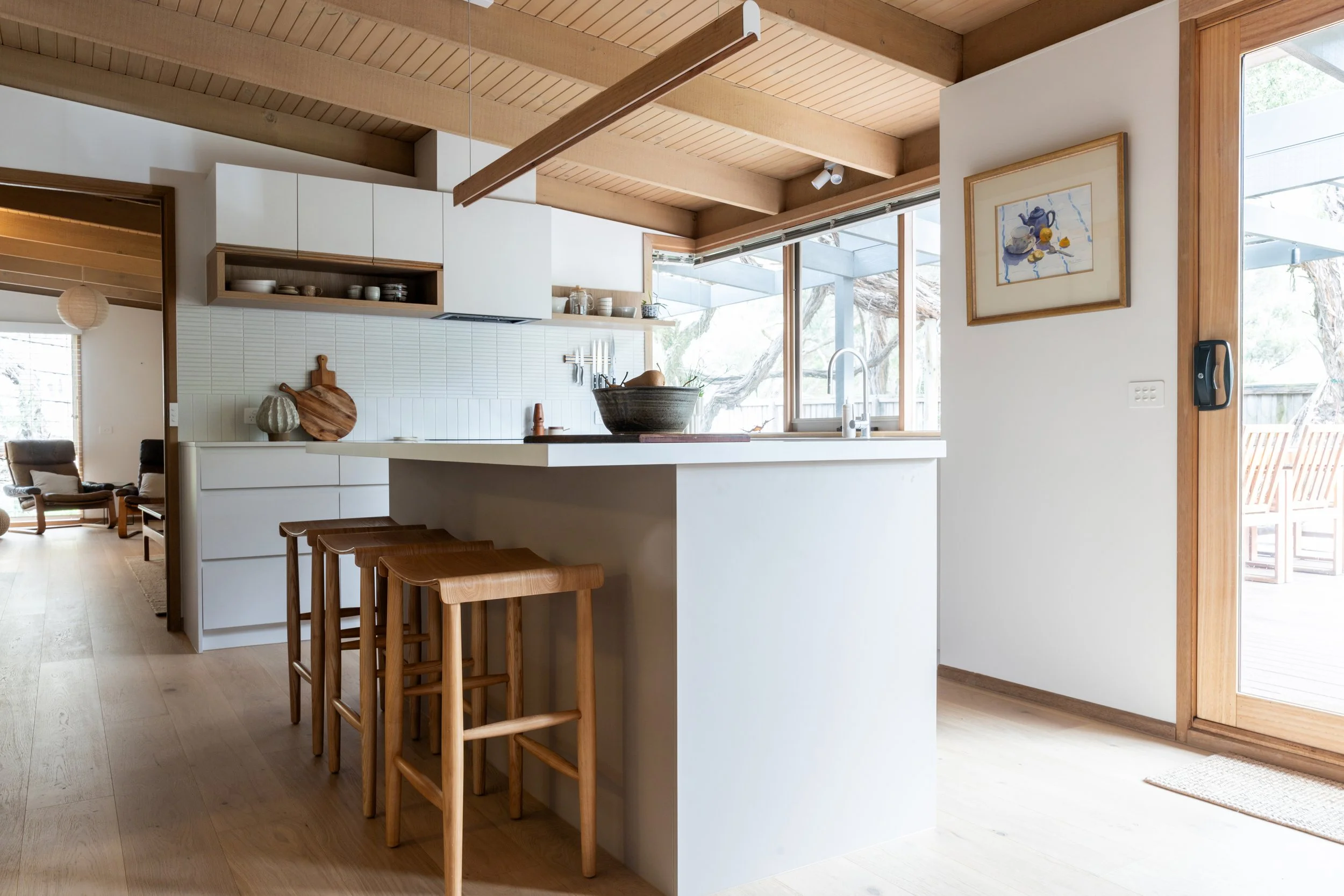
Inala House - what might have been considered a knockdown rebuild by some, became a treasured restoration by Assembly Interiors and Restore Create.
The Appeal of a Volume Builder
Volume builders exist for a reason. They offer:
Set pricing structures
Pre-designed floorplans
A relatively fast, predictable process
For many people, that feels safe. You can walk through a display home, choose from a menu, and feel like you’ve made progress quickly. And if your priority is speed, budget certainty, and minimal involvement - it can work.
But here’s where things often start to unravel.
The Pitfalls (That no one mentions upfront)
1. You’re designing within a box
You’re not starting from your lifestyle - you’re adapting to a pre-existing plan. Small compromises stack up quickly: awkward storage, poor flow, or rooms that don’t quite work for how you actually live. A meaningless media room you don’t need, but is costing you significantly.
2. Selections become overwhelming (and generic)
You’re handed a stack of brochures and a showroom appointment, asked to make dozens if not hundreds of decisions in a short time.
Without guidance, most people default to “safe” - which often results in a home that looks like everyone else’s.
3. Hidden costs add up
The base price is rarely the final price. Upgrades, variations, and “small changes” can quietly push the budget well beyond what you expected - often without delivering true value.
Think you can swap the default chrome tapware for brushed nickel? That’s an upgrade. Adjusting kitchen cupboards to drawers? You’ll soon be trying to balance longed for functionality with a blown out budget.
4. No one is looking at the big picture
There’s rarely a single person overseeing the entire design. You end up with a collection of decisions, rather than a cohesive home. One contact for the contract, one for joinery, one for variations, another for internal finishes and yet another for lighting and electrical. You become the project manager and client….is it any wonder people find renovating stressful?
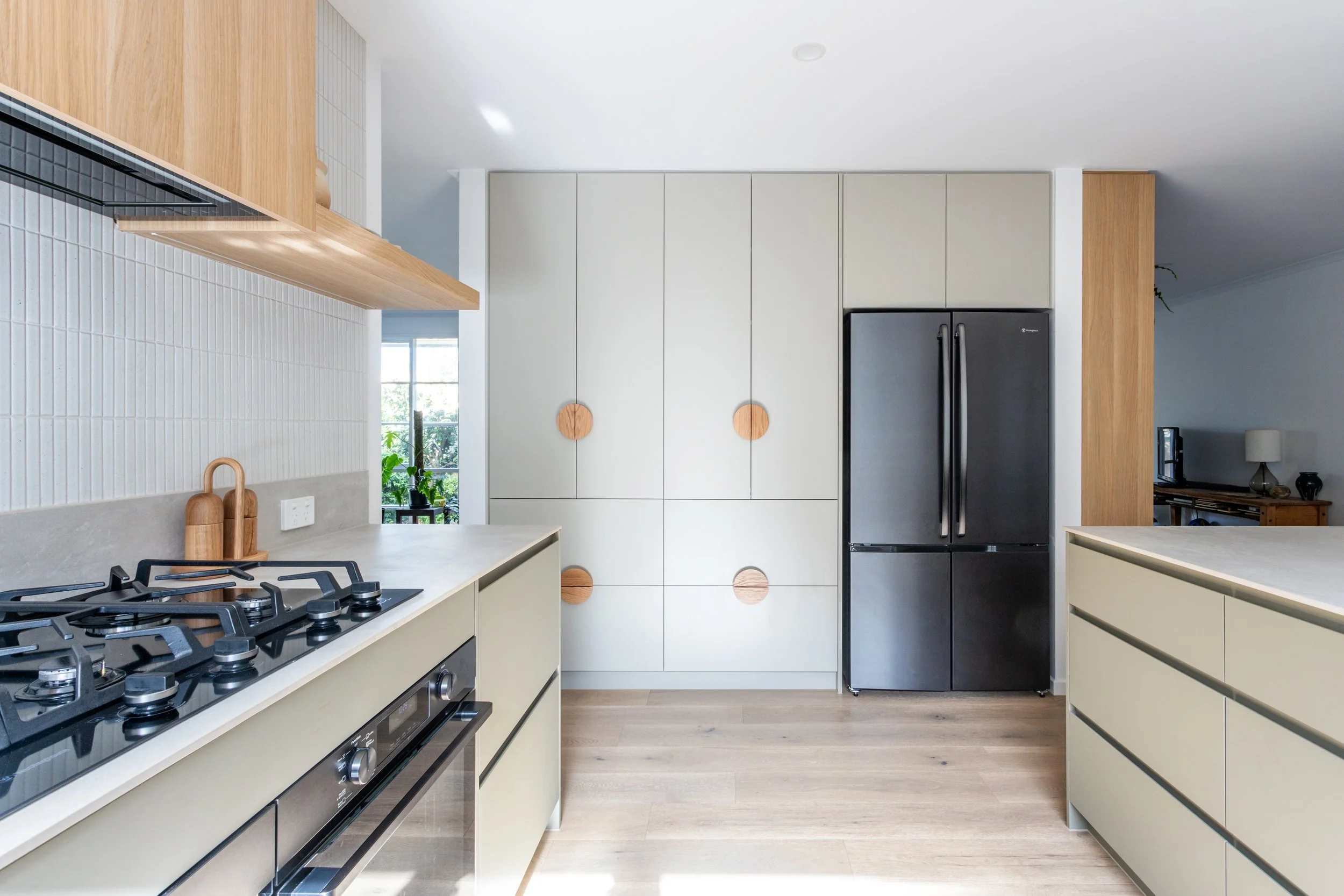
The relationship between designer, builder, cabinet maker and client makes for a successful project, seen here in our Myrtle House project.
So Why Do People Avoid the Custom Route?
Because it sounds harder. Common concerns I hear:
“It feels more expensive”
“I don’t have time to manage it”
“What if I make the wrong decisions?”
“I don’t even know where to start”
All completely valid and also exactly why this approach works better when done properly.
What a designer + custom builder actually delivers.
1. Your home starts with you
Not a template. Not a display home. Your layout, storage, and flow are designed around how your family actually lives - now and into the future.
This is where the biggest shift happens. We’re not trying to “make it work” within a fixed plan, we’re shaping the plan around you.
2. You’re not limited to a stock standard selection process
With a volume builder, you’re typically choosing from a pre-set range - often designed to meet a price point, not a long-term outcome. With a designer-led approach, we’re sourcing specifically for your project.
That means:
Researching the right suppliers for your budget (not just the builder’s default)
Selecting materials that are appropriate for how the space will be used
Balancing aesthetics with durability, sustainability, and longevity
It also means avoiding the all-too-common pattern of low base inclusions followed by constant upgrades. No builder-grade shortcuts disguised as “standard.” No unnecessary upsells just to get to a decent finish.
We start at the right level and design from there.
3. The details are actually considered (obsessed over really)
This is the part most people don’t realise matters… until it’s too late. Things like:
Thoughtful joinery design (not just off-the-shelf cabinetry layouts)
Consistent material transitions
Avoiding dated or heavy detailing like quad everywhere
Minimising reliance on metal tile trims by designing cleaner junctions
Individually, they seem small. Together, they define how your home feels. A well-designed home feels resolved. Calm. Intentional. Not like a series of compromises.
4. You’re guided — not left to figure it out
In a volume build, the responsibility often sits with you to make the “right” decisions - quickly, and without context. Here, that pressure is removed.
You’re supported through:
Curated selections (not endless options)
Clear recommendations based on experience
Multiple touchpoints to review, refine, and adjust
You’re still involved - but it’s a collaboration, not carrying the weight of every decision alone.
5. You can actually see what you’re getting
One of the biggest advantages is clarity. Through detailed drawings, modelling, and realistic renders, you’re able to properly understand:
How the space will function
How materials and colours work together
Where key elements sit and how they interact
This isn’t vague mood imagery or generic inspiration. It’s your home, resolved before it’s built. Which means fewer surprises, fewer regrets, and far more confidence moving forward.
6. It’s a more considered (and ultimately smoother) process
There’s a misconception that custom = complicated. In reality, when the right team is in place, it’s the opposite.
Decisions are made earlier, with more clarity. Issues are resolved before they hit site. And the builder is working from a clear, cohesive set of documents - not filling in gaps on the fly.
The result is a process that feels more controlled, more collaborative, and far less reactive.
Having recently worked with a client going through the volume builder process, you can see how my involvement positively shaped a stressful experience -
“Courtney from Assembly Interiors was an invaluable part of our knockdown rebuild journey.
We're visual people, and without Courtney's design expertise, thoughtful recommendations and realistic colour renders, we would have struggled to confidently bring our design vision to life.
The selection process can be overwhelming, with numerous decisions about colours, tiles, flooring, fittings and finishes to make in a single day. Courtney guided us through every stage, helping us avoid decision fatigue while ensuring our selections remained cohesive, cost-effective and true to our design brief.
Courtney was far more than a designer - she became a trusted partner throughout the process. Her practical advice also helped us avoid unnecessary upgrades, delivering value that more than offset her design fee.
Coupled with her design talent, Courtney is a genuinely lovely person who is passionate about helping her clients create homes that reflect their vision and lifestyle.
If you're building with a volume or custom builder, we highly recommend Courtney at Assembly Interiors. Her expertise and guidance made the entire design process far more enjoyable and gave us complete confidence in our final selections.”
The real difference is the experience
A volume build is largely transactional. A custom project is collaborative - but led. And that’s the key shift. You’re not expected to have all the answers, you just need to trust the process and have the right team guiding it.
The Bottom Line
A volume builder can get you a house. A designer + custom builder creates a home that actually works - for your life, your family, and how you want to feel in your space.
And once you’ve experienced that difference, it’s very hard to go back.
If you’re in that early stage of “which way do we go?” - this is exactly the conversation worth having properly, before anything is locked in. Reach out to see how we can help.