
Materials and Finishes That Suit Mid-Century Homes in Melbourne
Choosing materials for a mid-century home requires a slightly different mindset than designing a brand-new house. Rather than chasing trends, the goal is to select finishes that feel natural within the context of the home’s architecture.
If you understand the design principles behind mid-century homes (covered in the first article of this series), material choices start to become much clearer.
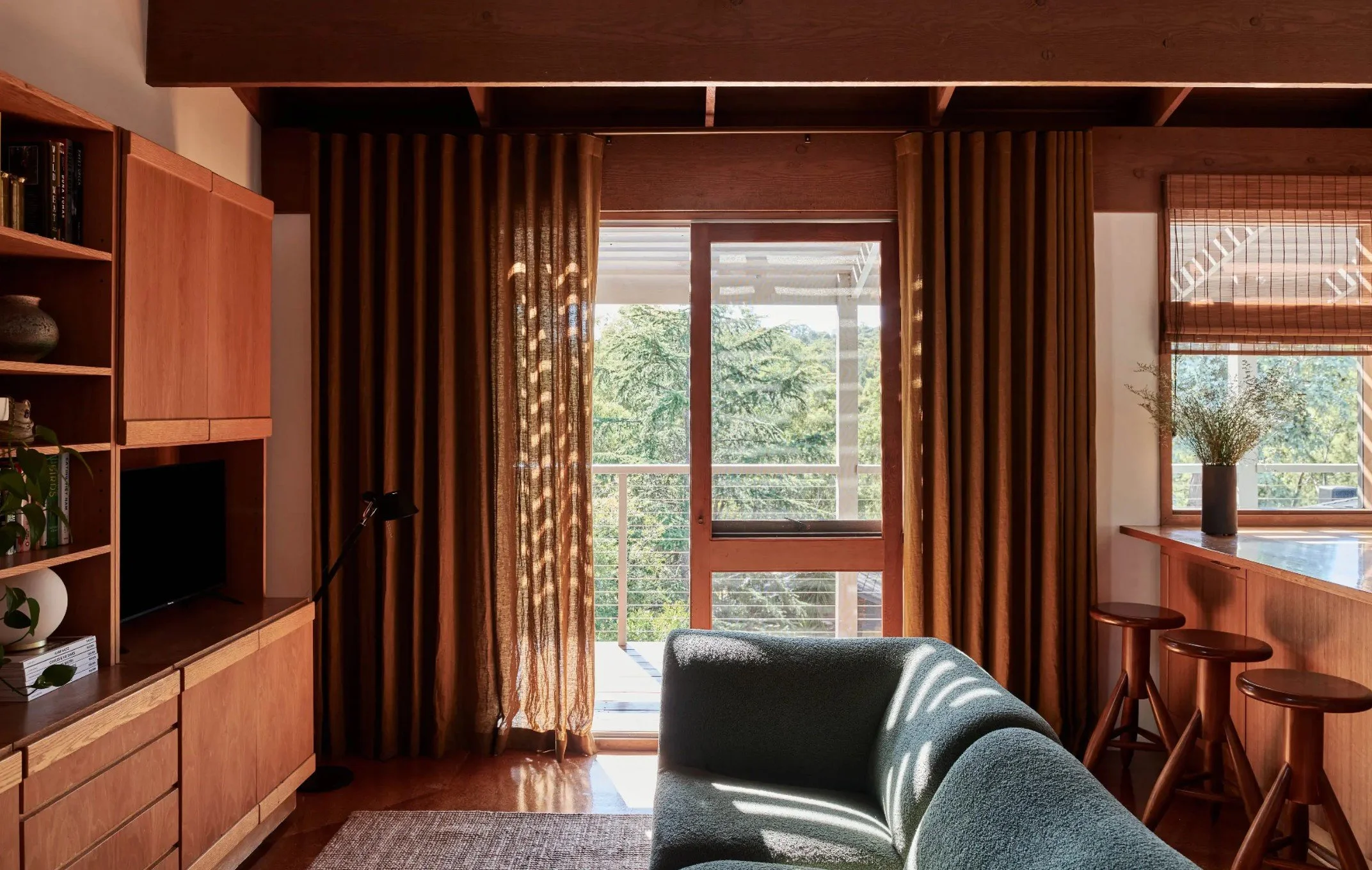
Stunning timber detailing and joinery add warmth and texture to this home.
Timber: The Foundation of Many Mid-Century Interiors
Timber played a major role in mid-century interiors, adding warmth and texture to otherwise simple spaces.
Some of the most sympathetic choices include:
Walnut tones
Teak-inspired finishes
Tasmanian Oak
Timber battens or wall detailing
The aim isn’t to create a heavy timber interior, but to allow natural materials to anchor the space.
Stone and Surfaces
Mid-century homes often favour surfaces that feel tactile and understated.
Good options include:
Terrazzo
Honed natural stone
Concrete surfaces
Laminates used in simple profiles
Many original kitchens used laminate quite effectively, so modern interpretations can still feel appropriate when used thoughtfully.
Tiles That Reflect the Era
Tiles are another area where material choices can dramatically influence the final feel of a renovation.
Some styles that work particularly well include:
Small mosaic tiles
Stacked rectangular tiles
Handmade ceramics with slight variation
Simple geometric patterns
These options echo the materials commonly used in bathrooms and laundries during the mid-century period.
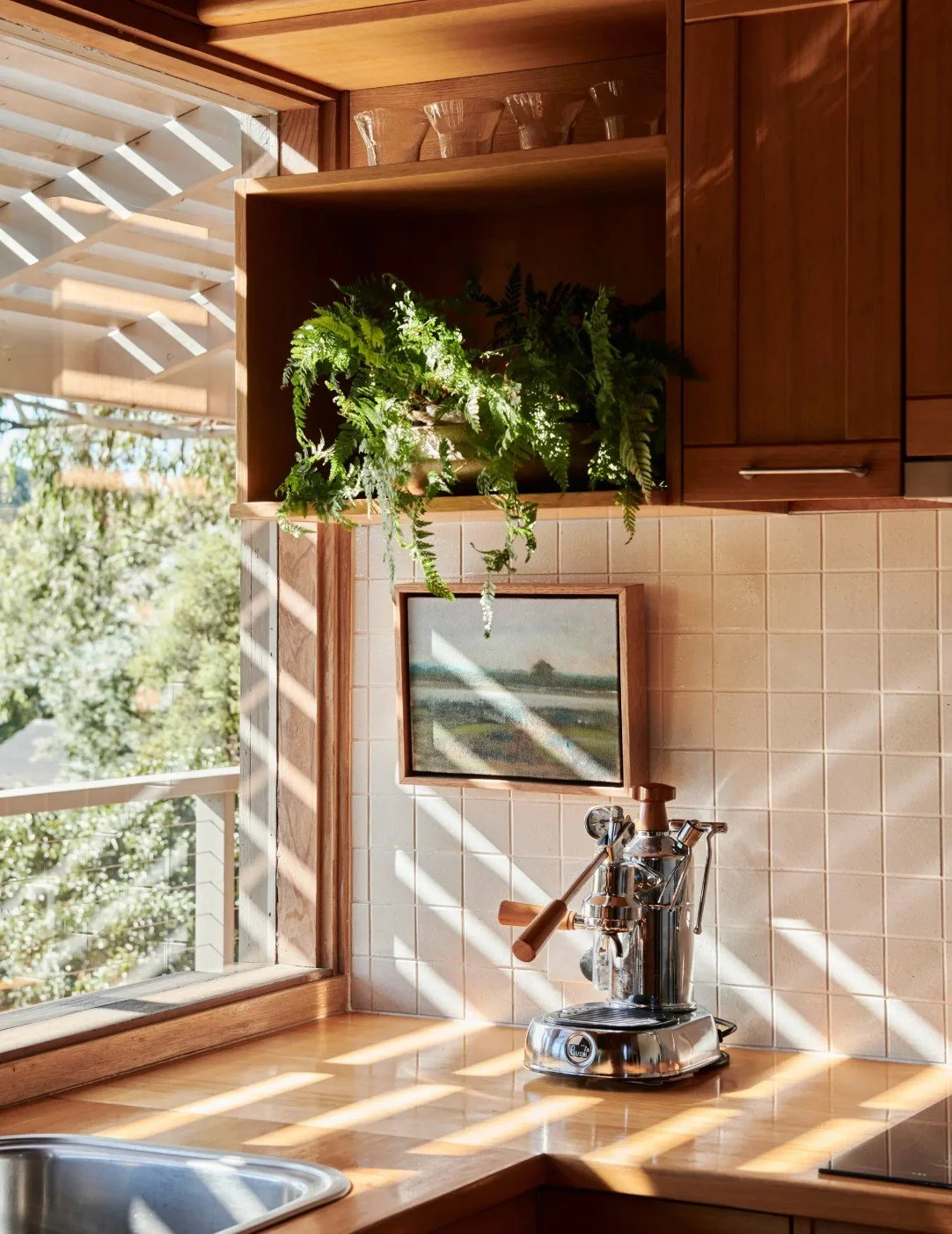
A restored kitchen with familiar original detailing.
Colour Palettes
Mid-century colour palettes tend to sit comfortably within the landscape.
You’ll often see:
Warm neutrals
Olive and eucalyptus greens
Clay and rust tones
Muted mustard shades
Used sparingly, these colours add depth without overpowering the simplicity of the architecture and allow for bolder choices through furniture and artwork.
Lighting
Lighting is an easy way to reinforce the era without becoming overly thematic.
Some appropriate options include:
Globe lighting
Simple geometric pendants
Brass or bronze finishes
Minimal wall sconces
The key is choosing fixtures that feel sculptural but still restrained.
Bringing It All Together
When restoring a mid-century home, materials should support the architecture rather than compete with it.
Natural textures, warm tones and simple forms tend to work best. When these elements are combined thoughtfully, the result is a home that feels both contemporary and true to its origins.
If you’re just beginning the process, it’s worth starting with a broader understanding of what makes mid-century homes in Melbourne so distinctive, before diving into the details of restoration and material selection.
If you're planning your own restoration of a mid-century beauty in Melbourne and want clarity on what your specific project might involve, a tailored scope conversation is always the best first step. Start the conversation here.
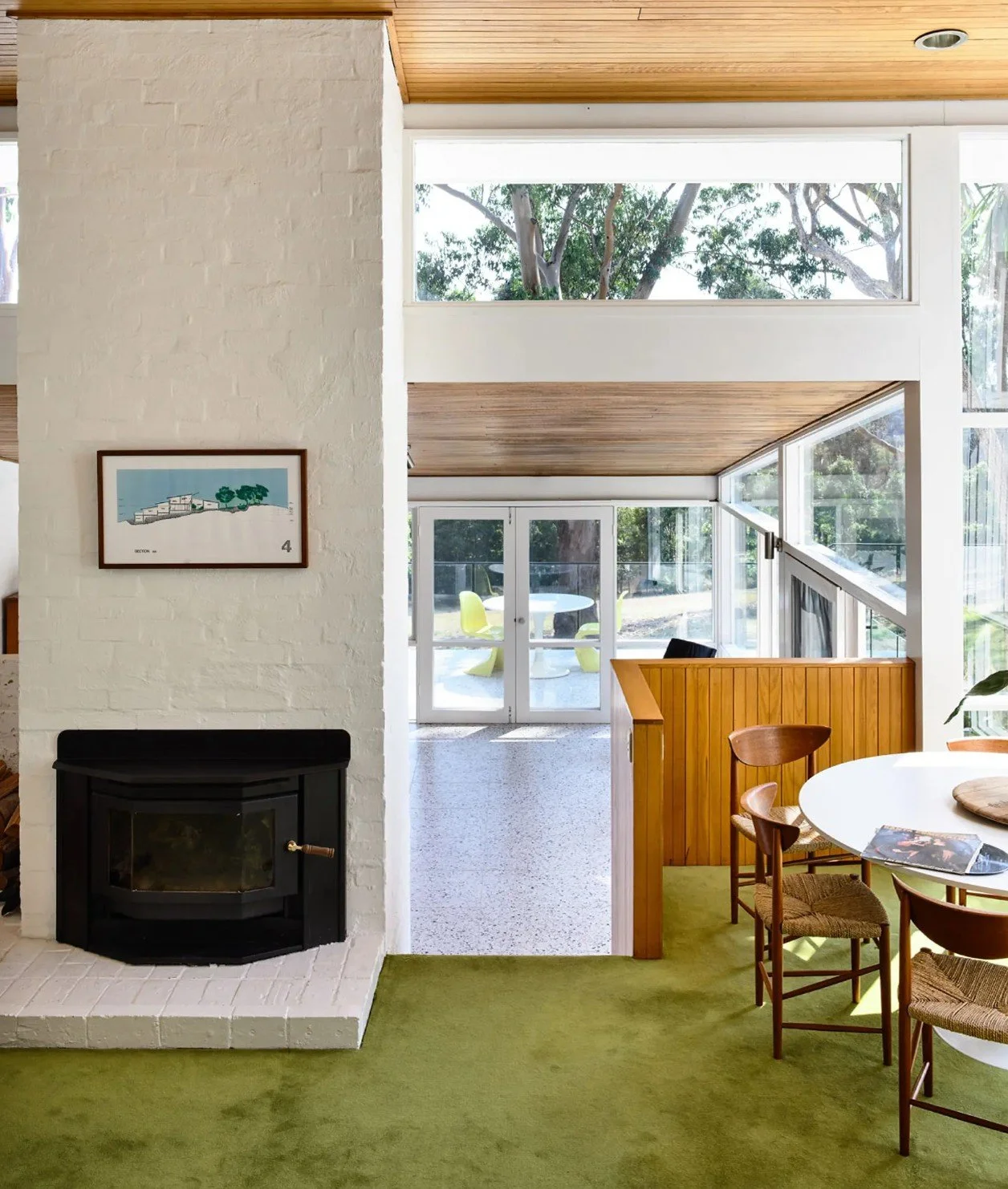
Green carpet and terrazzo are synonymous with a modern mid-century approach.