

Bathroom Renovations: What No One Tells You (But You Absolutely Need to Know)
Bathrooms are one of those spaces that seem straightforward - until you’re in the middle of one.
On the surface, it’s tiles, tapware and a vanity. In reality, it’s a highly technical space where every decision has a flow-on effect. Get it right, and it feels effortless. Get it wrong, and it’s expensive to fix.
If you’re planning a bathroom renovation in Melbourne, here’s what actually needs to be considered before you start pulling anything apart.
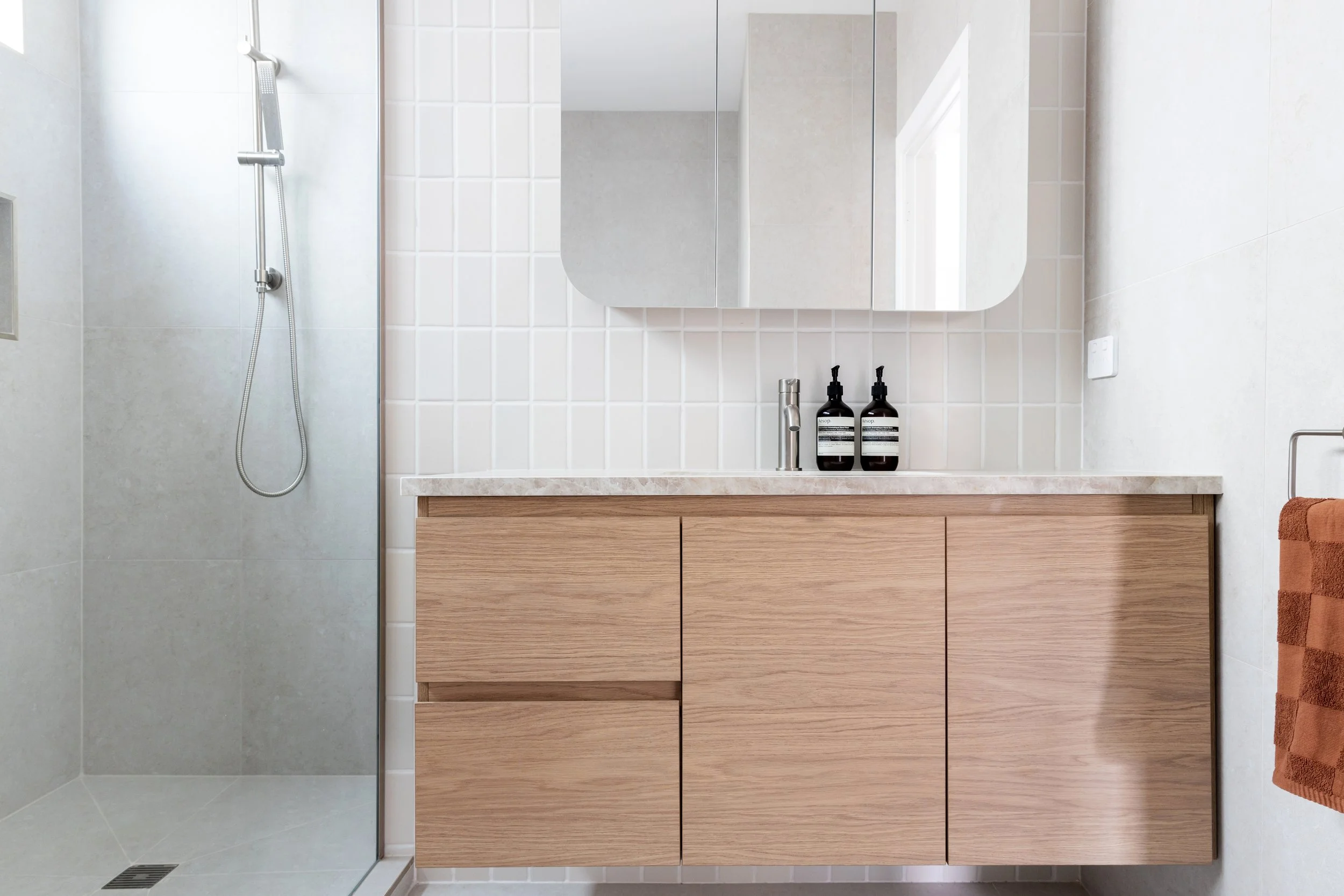
Our beautiful Beleura Hill project benefitted from a strong core team of interior designer, builder and cabinet maker - all committed to a successful project.
Layout isn’t just about looks
A good layout is doing a lot more than “fitting everything in.”
You’re working with:
Existing plumbing locations (and the cost to move them)
Structural walls and load points
Minimum clearances for usability and compliance
Door swings and circulation space
Small shifts, like 100mm, can be the difference between a cramped bathroom and one that feels calm and considered.
This is where experience matters. Knowing what can move versus what shouldn’t is key.
Waterproofing and compliance (the unsexy but critical bit)
No one gets excited about waterproofing…until it fails. Bathrooms in Australia must comply with strict standards around:
Waterproofing zones
Floor falls to wastes
Shower gradients
Ventilation requirements
Miss this, and you risk mould, leaks, and long-term structural damage.
Having the right team in place ensures everything is accounted for correctly before it hits site - so your builder and trades aren’t making judgement calls on the fly.
Tile selection is more technical than you think
It’s easy to get caught up in selecting beautiful times, but tiles aren’t just a visual decision.
You need to consider:
Slip ratings (especially for floors and showers)
Tile thickness (impacts transitions and set-out)
Rectified vs non-rectified edges
Grout width and colour
Porosity and suitability for wet areas
Application (some tiles simply aren’t made for floors or walls)
And then there’s layout:
Where cuts land
How patterns align
How niches integrate
Good tile design looks effortless. It rarely is. A designer plans for this to ensure a beautiful execution on-site where it matters.
Set-Outs: Where the detail lives
This is the part most people don’t think about and where bathrooms are either elevated or fall flat.
Set-outs include:
Aligning tiles with vanities, mirrors and niches
Ensuring tapware lands centred (not “close enough”)
Avoiding awkward tile slivers at edges
Planning for symmetry wherever possible
Without a clear set-out, trades will make it work on site - but it won’t feel resolved.
Shower Design: More than a screen
Frameless, semi-frameless, fixed panel, full enclosure… it’s not just a style choice.
You need to consider:
Splash zones and water containment
Bathroom size and ventilation
Door clearance and usability
Cleaning and long-term maintenance
A poorly planned shower = water everywhere. Every day.
Lighting (Often an afterthought… shouldn’t be)
Lighting in bathrooms needs to work hard. You’re balancing:
Task lighting (for mirrors)
Ambient lighting (overall feel)
Accent lighting (if you want to elevate it)
Placement matters just as much as selection. Downlights in the wrong spot can cast shadows exactly where you don’t want them. A documented lighting plan ensures ambience and functionality work hand in hand across all times of day.
Joinery and storage that actually works
Vanities aren’t one-size-fits-all. Beyond practicality, they are a key feature of a bathroom providing the opportunity layer in tactility alongside useability.
Consider:
Depth and proportion to the space
Internal drawer configuration
Power points inside drawers or cupboards
Integration with basins and tapware
This is where custom joinery really comes into its own, especially in family homes where storage is non-negotiable.
Ventilation and longevity
A beautiful bathroom that doesn’t ventilate properly won’t stay that way for long.
You need to plan for:
Mechanical ventilation (exhaust fans, ducting)
Natural ventilation where possible
Material selections that can handle moisture over time
Longevity is part of good design, especially in a bathroom where costs can escalate (the old adage, do it once and do it right!)
So… where does a designer fit in?
A bathroom renovation involves a surprising number of decisions - many of which aren’t visible in the finished space, but have a huge impact on how it functions and lasts.
My role is to:
Resolve the layout properly from the outset
Document everything clearly for trades
Specify materials that are both beautiful and appropriate
Think through the details you don’t have time to
It’s not about overcomplicating the process. It’s about making sure it runs smoothly and the end result actually lives up to what you had in mind.
If you’re planning a renovation and want it properly considered from the start, this is exactly where having someone step in early makes all the difference.
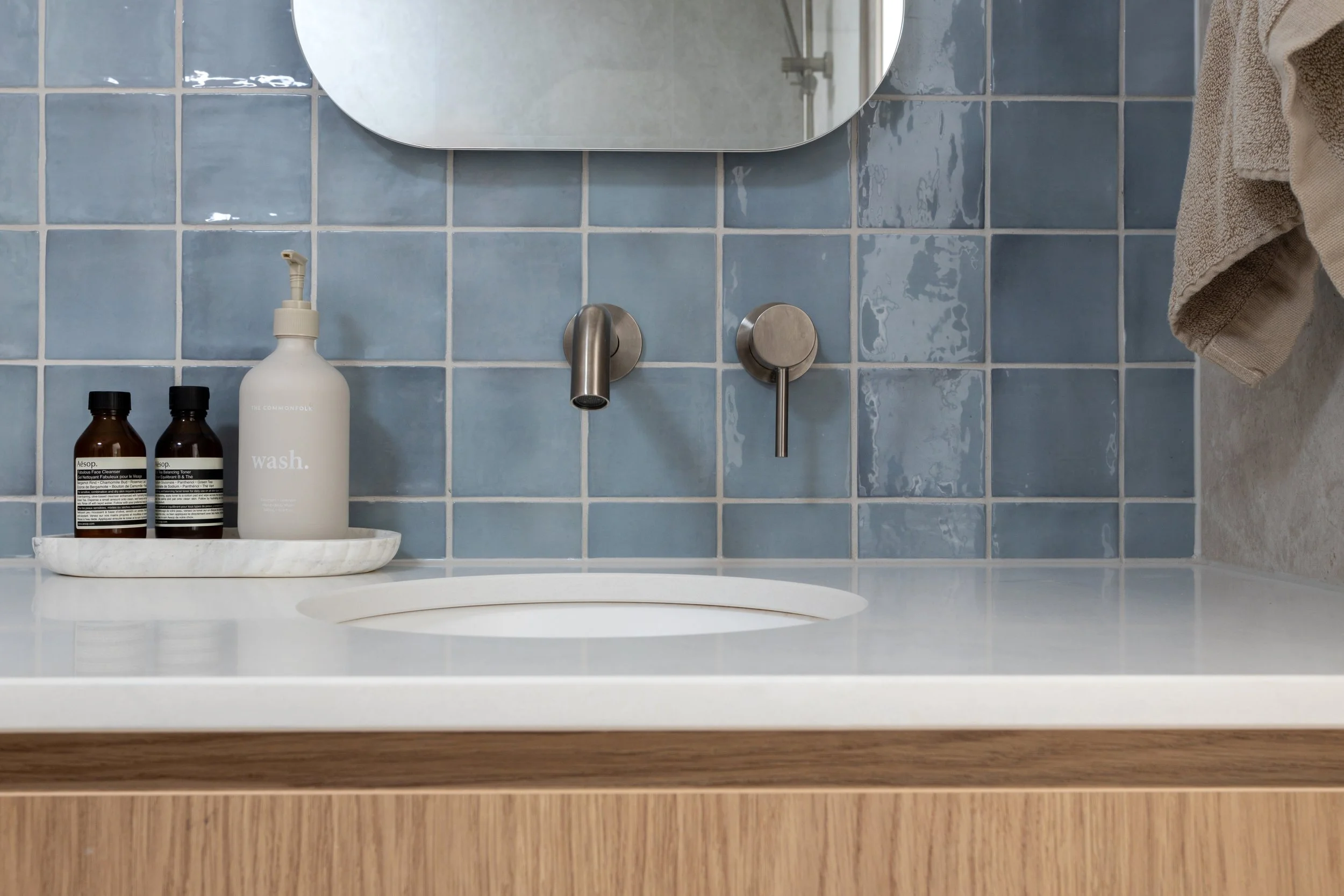
Interior design planning creates a seamless experience onsite in these critical rooms.
If you're planning a renovation in Melbourne and want clarity on what your specific project might involve, a tailored scope conversation is always the best first step. Every home is different and at Assembly Interiors, we feel strongly that the right design support should feel considered, not cookie-cutter.